
Osteopathy in pregnancy: when should you book a session?
During pregnancy, your body changes quickly: your bump grows, your weight is distributed differently and your pelvis becomes more supple. These changes often come with back, pelvic or rib pain. Osteopathy can help you cope better with these discomforts, alongside the care provided by your midwife and your gynaecologist, who remain your main points of contact.
Why does the body become painful during pregnancy?
As the months go by, your centre of gravity shifts forward. To keep their balance, many women arch their lower back more and pull their shoulders back. The muscles of the back and buttocks then have to work harder.
At the same time, hormonal changes make the ligaments more supple, especially around the pelvis. This suppleness prepares the body, but it can make some joints more sensitive. Finally, the growing uterus pushes the organs upwards, which can make breathing harder or cause pain around the ribs.
This pain is common and usually harmless. It still deserves to be taken seriously, as it can disturb your sleep, your walking and your daily life.
The discomforts that often lead to a visit
- Back pain, especially in the lower back, which gets worse at the end of the day or after standing for a long time.
- Pelvic pain, at the front around the pubic bone or at the back near the buttocks, often triggered by walking, climbing stairs or turning over in bed.
- Pain that travels down into the buttock or thigh. It has several possible causes and should be reported to your midwife or doctor if it comes with tingling or weakness.
- Tension between the shoulder blades, in the neck or in the rib cage, often made worse by heavier breasts and lack of sleep.
For back pain outside pregnancy, you can also read our article back pain, when to see an osteopath.
When in pregnancy should you book a session?
There is no single right time. You can book as soon as a discomfort appears, provided your pregnancy is being followed by a midwife or a gynaecologist. Tell them you plan to see an osteopath: they know your medical file and can point out any precautions to take.
In the first trimester
Nausea and tiredness often dominate. These are a matter for your medical follow-up. A session is still possible for back or neck pain, using suitable techniques.
In the second trimester
This is often when back and pelvic pain appears, as your bump grows. Coming in at this stage also gives you posture advice for the months ahead.
In the third trimester
Positions become less comfortable and sleep more difficult. The session aims above all at your comfort. We make no promises about how the birth will go: preparing for it is the role of your midwife and the maternity team.
After the birth
A session can be considered after your postnatal check-up, or earlier with your midwife's agreement, for example for pain linked to carrying or breastfeeding your baby. Pelvic floor rehabilitation is the role of your midwife or a specialist physiotherapist.
How a session works during pregnancy
The session begins with a conversation about the stage of your pregnancy, your current follow-up, your medical history and the type of pain. Let us know about any known complications and any specific advice you have received from your midwife or gynaecologist.
The techniques are chosen according to the stage of pregnancy and your comfort. We favour gentle approaches: slow mobilisations, stretches, and work on the tissues of the back, pelvis and rib cage. You lie on your side, sit, or lie on your back supported by cushions. In late pregnancy, we avoid having you lie on your back for long, as this position can make you feel faint.
Members of our team have completed postgraduate training in women's health. Our approach is described on the page osteopathy during pregnancy.
When to call your midwife, your gynaecologist or the emergency services first
Some signs fall outside the scope of osteopathy. Contact your midwife, your gynaecologist or the maternity unit without delay if you have:
- vaginal bleeding or a loss of fluid;
- regular or painful contractions before full term, or severe pain in your abdomen;
- fewer movements from your baby, or none at all;
- fever, a burning sensation when you urinate, or pain on one side of your back together with fever;
- severe headaches, problems with your vision or sudden swelling of your face or hands;
- a painful, warm or swollen calf;
- a fall or a blow to your abdomen.
If you suddenly become short of breath, have chest pain, feel faint or have heavy bleeding, call 144, the emergency number, immediately.
Tips for everyday life
- Move regularly. Walking, swimming or suitable antenatal exercise, with your midwife's agreement, help you stay mobile.
- Sleep on your side, with a pillow between your knees and, if needed, another one under your bump.
- Get out of bed gently: roll onto your side with your knees together, then push up with your arms to sit.
- Spread your weight over both legs when standing, and avoid always carrying a child on the same hip.
- Bend your knees to lift, keep the load close to your body and avoid heavy loads.
- Take breaks if you sit or stand for long periods.
Before taking any painkiller, even one sold over the counter, ask your doctor, your midwife or a pharmacist for advice.
This article is by Zaylie Frieden, assistant osteopath. If a discomfort is affecting your daily life, you can book a session at the practice in Lausanne.
Frequently asked questions
Is osteopathy safe during pregnancy?
No treatment is completely free of risk, but the techniques are adapted to pregnancy and chosen with care. The condition is that your pregnancy is being followed and that you give us the relevant information. If your pregnancy is high-risk, ask your gynaecologist for advice first.
Can an osteopath help a breech baby turn?
We do not promise to turn a baby. Your baby's position is monitored by your midwife and your gynaecologist, who will explain the medical options to you if needed.
Do I need a prescription to see an osteopath?
No, you do not need a prescription to see an osteopath. Supplementary insurance policies do, however, have their own conditions for reimbursement: check with your health insurer.
Can I then bring my baby to see you?
Yes, osteopathy is also for babies, always alongside the care of your paediatrician. Our article osteopath for babies, when to go helps you know in which situations.
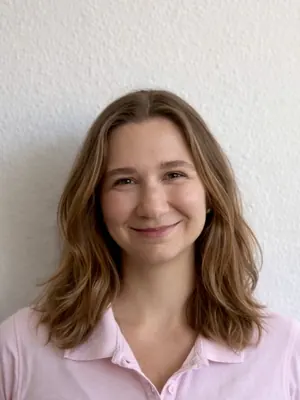
Written by Zaylie Frieden, assistant osteopath at Georgette Ostéopathie. Graduate of the European School of Osteopathy in Maidstone (UK).
Book an appointment
Request an appointment online in a few clicks, or call us on 021 320 45 05, Monday to Friday, 8 am to 6.30 pm.
Prefer to pick a free slot yourself? See availability on OneDoc
Further reading
Back pain: when should you see an osteopath?
Is your back hurting, or does the pain keep coming back? Find out when to see an osteopath, and when to see a doctor first.
Matthieu Chappot · 6 min read
Lumbago: what to do in the first 48 hours?
Has your back suddenly seized up? Positions, gentle movements and warning signs to get you through the first two days of lumbago.
Alessandro Ponzo · 6 min read